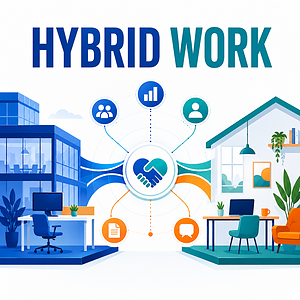
하이브리드 근무의 성패는 일주일에 며칠 출근하느냐만으로 결정되지 않는다. 성과를 무엇으로 평가하고, 언제 만나며, 어떤 방식으로 정보를 공유할 것인지가 더 중요하다. 근무 장소의 유연성을 조직의 성과로 연결하려면 일하는 방식 전체를 다시 설계해야 한다.
[Key Message]
* 하이브리드 근무의 성패는 출근 일수가 아니라 성과를 정의하고 업무를 연결하는 운영체계에 달려 있다.
* 근무 시간과 가시성보다 결과물의 품질, 기한 준수, 협업 기여도를 중심으로 성과를 평가해야 한다.
* 실시간 회의와 비동기 협업을 업무 목적에 맞게 구분해야 집중력과 의사결정의 품질을 함께 높일 수 있다.
* 사무실은 일상적인 개인 업무를 수행하는 장소가 아니라 협업, 학습, 관계 형성, 복잡한 문제 해결을 위한 공간으로 재설계되어야 한다.
* 하이브리드 시대의 관리자는 구성원을 감시하는 사람이 아니라 목표, 정보, 책임, 의사결정의 흐름을 설계하는 조정자가 되어야 한다.
***
출근 일수에 갇힌 논쟁
하이브리드 근무를 둘러싼 논쟁은 오랫동안 사무실과 재택근무 가운데 어느 쪽이 더 생산적인지를 따지는 방식으로 진행됐다. 경영진은 구성원들이 사무실에 모여야 소통과 혁신이 살아난다고 주장했고, 직원들은 출퇴근 시간을 줄이고 집중할 수 있는 재택근무가 더 효율적이라고 맞섰다. 기업들은 주 3일 출근이나 특정 요일 의무 출근과 같은 규칙을 만들었고, 사무실 복귀율을 조직 정상화의 지표처럼 관리했다.
그러나 같은 출근 규정을 적용한 조직에서도 성과는 서로 다르게 나타났다. 어떤 팀은 일주일에 한 번만 만나도 빠르게 의사결정을 내리고 안정적으로 프로젝트를 수행했다. 반면 어떤 팀은 매일 사무실에 모여 있으면서도 회의가 길어지고 정보가 일부 사람에게 집중되며 책임 소재가 불분명해졌다. 물리적으로 같은 공간에 있다는 사실만으로 협업이 이루어지는 것은 아니었다.
반대의 경우도 마찬가지였다. 재택근무가 집중력을 높여준다는 구성원이 있는가 하면, 질문할 상대를 찾지 못하고 혼자 문제를 해결하느라 더 많은 시간을 쓰는 구성원도 있었다. 업무 경험이 풍부하고 조직의 인적 네트워크를 잘 아는 사람은 원격 환경에서도 필요한 정보를 쉽게 구했다. 신입사원이나 직무를 바꾼 사람은 누구에게 무엇을 물어야 하는지조차 알기 어려웠다. 동일한 제도가 사람과 직무에 따라 전혀 다른 경험을 만들어낸 것이다.
이러한 차이는 하이브리드 근무가 단순한 공간 정책이 아니라는 사실을 보여준다. 핵심은 사무실과 집을 어떤 비율로 섞느냐가 아니다. 업무를 어떻게 나누고, 진행 상황을 어떻게 확인하며, 필요한 정보를 어디에 남기고, 누가 어떤 결정을 내리는지가 더 중요하다. 출근 일수는 운영체계의 작은 한 부분일 뿐이다.
많은 기업이 하이브리드 근무의 문제를 발견하면 출근 일수부터 늘리려 한다. 협업이 느려졌으니 더 자주 만나게 하고, 조직문화가 약해졌으니 사무실 행사를 늘린다. 그러나 업무 목표가 불분명하고 평가 기준이 모호한 상태에서 출근만 늘리면 구성원들은 같은 공간에서 온라인 회의에 참석하고 개인 업무를 처리하게 된다. 사무실은 붐비지만 협업의 품질은 달라지지 않는다.
따라서 하이브리드 근무를 점검하는 첫 번째 질문은 “몇 번 출근하는가”가 아니라 “업무가 어떤 방식으로 완성되는가”여야 한다. 장소를 정하기에 앞서 조직이 수행하는 업무의 성격을 구분해야 한다. 혼자 깊이 생각해야 하는 업무, 여러 사람이 빠르게 의견을 조율해야 하는 업무, 경험자의 행동을 관찰하며 배워야 하는 업무, 고객이나 현장과 직접 만나야 하는 업무는 각각 가장 적합한 환경이 다르다. 모든 업무를 하나의 출근 규칙으로 관리하려는 순간 하이브리드는 유연한 제도가 아니라 또 하나의 경직된 규정이 된다.
존재감에서 결과 중심으로
사무실 중심 조직에서 성과는 업무 결과만으로 평가되지 않았다. 자리에 오래 머무는 사람, 관리자와 자주 마주치는 사람, 회의에서 적극적으로 발언하는 사람이 성실하고 유능한 구성원으로 인식되기 쉬웠다. 일의 내용보다 일하는 모습이 평가에 영향을 주는 가시성 편향이 존재했다.
하이브리드 환경에서는 이 문제가 더욱 선명해진다. 사무실에 자주 나오는 직원은 관리자에게 자연스럽게 진행 상황을 설명하고 비공식적인 대화에도 참여한다. 재택근무자는 같은 수준의 결과를 내더라도 업무 과정이 눈에 잘 보이지 않는다. 관리자와 접촉할 기회가 적어지면 중요한 업무나 승진 기회에서도 멀어질 수 있다. 성과 평가 기준이 분명하지 않은 조직일수록 관리자는 자신이 자주 본 사람을 신뢰하는 경향을 보인다.
이러한 문제를 해결하려면 성과를 근무시간이나 접속 상태가 아니라 업무의 완결성으로 측정해야 한다. 무엇을 언제까지 완성해야 하는지, 결과물은 어떤 기준을 충족해야 하는지, 다른 업무와 어떤 방식으로 연결되는지를 사전에 합의해야 한다. 목표가 분명하면 관리자는 구성원이 어디에 있는지 계속 확인할 필요가 없다. 구성원도 자신의 성과를 보여주기 위해 온라인 상태를 유지하거나 불필요한 보고를 반복하지 않아도 된다.
다만 결과 중심 평가를 단순히 숫자 중심 평가로 이해해서는 안 된다. 측정하기 쉬운 결과만 강조하면 장기적인 학습, 동료 지원, 위험 예방, 관계 형성과 같은 중요한 기여가 평가에서 빠질 수 있다. 자신의 목표는 달성했지만 동료에게 필요한 정보를 제공하지 않거나, 개인 실적을 높이기 위해 협업을 회피하는 행동이 나타날 수도 있다.
하이브리드 환경의 성과 평가는 개인 결과와 협업 기여를 함께 살펴야 한다. 맡은 과제를 얼마나 정확하고 제때 완성했는지뿐 아니라 다른 구성원의 업무가 원활하게 진행되도록 어떤 도움을 주었는지, 필요한 정보를 얼마나 투명하게 공유했는지, 문제를 조기에 발견해 조직의 손실을 줄였는지도 평가해야 한다. 개인의 생산성과 팀 전체의 생산성을 구분하지 않는 평가가 필요하다.
평가 주기도 달라져야 한다. 연말에 한 번 성과를 검토하는 방식은 하이브리드 환경에 적합하지 않다. 업무 과정이 눈에 잘 보이지 않는 만큼 목표와 진행 상황을 짧은 주기로 확인해야 한다. 매주 또는 격주로 우선순위를 점검하고, 프로젝트의 중요한 단계마다 기대 수준을 다시 맞추는 것이 효과적이다. 이것은 구성원을 감시하기 위한 보고가 아니라 업무가 잘못된 방향으로 오래 진행되는 것을 막는 조정 과정이다.
좋은 평가는 과거의 성과를 판정하는 데 그치지 않는다. 다음 행동을 명확하게 만드는 역할을 해야 한다. 현재 결과가 기대에 미치지 못했다면 업무 능력, 정보 부족, 역할 충돌, 지나친 업무량 가운데 무엇이 원인인지 구분해야 한다. 원인을 구분하지 않고 “재택근무라서 집중하지 못했다”거나 “사무실에 나오면 해결된다”고 판단하면 운영상의 문제를 개인의 태도 문제로 바꾸게 된다.
평가 기준이 명확해질수록 유연한 근무는 특혜가 아니라 업무 방식이 된다. 누가 사무실에 더 자주 나왔는지가 아니라 누가 약속한 결과를 만들고 팀의 흐름을 개선했는지가 중요해진다. 하이브리드 근무가 안정적으로 운영되기 위한 출발점은 장소의 통제가 아니라 성과 언어의 통일이다.
동시 업무와 비동기 업무의 조화
하이브리드 조직에서는 회의가 쉽게 늘어난다. 같은 공간에 있지 않다는 불안을 줄이기 위해 관리자는 진행 상황을 자주 확인하고, 구성원들은 자신이 일하고 있다는 사실을 보여주기 위해 회의와 메시지에 적극적으로 반응한다. 짧은 질문도 화상회의가 되고, 정보 공유를 위한 회의가 의사결정 회의와 뒤섞인다.
회의가 늘면 협업이 활발해 보이지만 실제로는 집중 시간이 잘게 나뉜다. 구성원은 회의와 회의 사이의 짧은 시간에 복잡한 업무를 처리해야 하고, 근무시간 이후에야 보고서 작성이나 기획과 같은 집중 업무를 시작한다. 하루 종일 소통했지만 정작 중요한 결과물은 늦어지는 역설이 발생한다.
하이브리드 환경에서는 모든 협업을 실시간으로 처리하려는 습관에서 벗어나야 한다. 협업은 같은 시간에 함께 수행하는 동시 업무와 각자의 시간에 이어서 수행하는 비동기 업무로 구분할 수 있다. 긴급한 의사결정, 복잡한 갈등 조정, 아이디어 토론처럼 반응의 속도와 상호작용이 중요한 업무는 동시 방식이 적합하다. 자료 공유, 진행 상황 보고, 단순 검토, 의견 수렴처럼 충분히 생각한 뒤 답하는 편이 좋은 업무는 비동기 방식이 효율적이다.
비동기 협업은 단순히 이메일이나 메신저를 사용하는 것을 뜻하지 않는다. 업무의 배경, 현재 상태, 필요한 결정, 담당자, 마감일이 다른 사람이 이해할 수 있는 형태로 기록되어야 한다. “이것 좀 확인해 주세요”라는 메시지만 남기면 상대방은 다시 질문해야 한다. 무엇을 왜 확인해야 하고, 어느 수준까지 검토해야 하며, 언제까지 답해야 하는지가 함께 제시되어야 업무가 끊기지 않는다.
문서화는 하이브리드 조직의 기억을 만든다. 사무실에서는 옆자리 대화로 해결된 문제가 기록되지 않아도 당장 업무가 진행될 수 있다. 그러나 재택근무자나 다른 시간대에 일하는 구성원은 그 대화에 접근할 수 없다. 중요한 결정이 회의 참석자의 기억에만 남으면 정보 격차가 발생하고, 같은 질문과 논의가 반복된다.
그렇다고 모든 대화와 결정을 길게 기록할 필요는 없다. 기록해야 할 핵심은 결정 내용, 결정 이유, 책임자, 다음 행동이다. 누가 어떤 판단을 내렸고 무엇이 달라졌는지를 짧고 일관된 형식으로 남기면 충분하다. 기록의 양보다 정보를 찾을 수 있는 구조가 중요하다.
협업 리듬도 명확해야 한다. 예를 들어 월요일에는 한 주의 우선순위와 위험 요소를 문서로 공유하고, 수요일에는 필요한 쟁점만 짧게 논의하며, 금요일에는 완료된 결과와 다음 주로 넘어갈 일을 정리할 수 있다. 매일 모든 사람이 참석하는 회의를 열기보다 업무의 성격에 맞춰 공유와 결정의 주기를 설계하는 방식이다.
응답 시간에 대한 합의도 필요하다. 하이브리드 환경에서는 메시지가 보이지 않으면 상대가 일하고 있는지 불안해지기 쉽다. 그 결과 모든 메시지에 즉시 답해야 한다는 압박이 생긴다. 긴급 메시지는 어느 채널로 보내고, 일반적인 질문은 몇 시간 또는 하루 이내에 답하며, 집중 시간에는 응답하지 않아도 된다는 규칙을 정하면 불필요한 긴장을 줄일 수 있다.
좋은 협업 리듬은 사람들을 계속 연결해 두는 것이 아니다. 연결할 시간과 분리할 시간을 구분하는 것이다. 함께 판단해야 할 때는 충분히 대화하고, 각자 실행할 때는 방해받지 않도록 보호해야 한다. 하이브리드 조직의 생산성은 소통량이 아니라 소통의 정확성과 시점에서 나온다.
목적이 분명한 사무실
하이브리드 근무에서 사무실의 의미도 달라져야 한다. 과거의 사무실은 업무가 시작되는 기본 장소였다. 출근하면 동료와 관리자를 만났고, 회의와 보고, 정보 교환이 자연스럽게 이루어졌다. 그러나 디지털 도구를 통해 상당수 업무를 장소와 무관하게 수행할 수 있게 되면서 사무실의 존재 이유를 다시 설명해야 하는 상황이 됐다.
직원들을 사무실로 불러 놓고 각자 이어폰을 낀 채 화상회의와 개인 업무만 하게 한다면 출근은 긴 통근시간을 추가하는 일에 그친다. 구성원은 “왜 나와야 하는가”라는 질문에 답을 얻지 못하고, 의무 출근을 통제의 신호로 받아들일 수 있다.
출근에는 구체적인 목적이 있어야 한다. 새로운 아이디어를 함께 만들고, 복잡한 문제를 여러 관점에서 검토하며, 말로 설명하기 어려운 갈등을 조정하는 일은 대면 환경에서 효과가 커질 수 있다. 신규 구성원이 선배의 업무 방식을 관찰하고 조직의 암묵적인 규칙을 익히는 데도 직접적인 교류가 중요하다. 고객 경험을 점검하거나 프로젝트의 중대한 전환점을 결정할 때도 한 공간에 모이는 것이 도움이 된다.
반대로 개인이 자료를 분석하고 보고서를 작성하거나 정해진 절차에 따라 업무를 처리하는 날이라면 반드시 사무실에 모일 필요는 없다. 집중이 필요한 업무를 출근일에 배치하고, 협업이 필요한 업무를 재택일에 흩어놓는다면 장소 선택의 이점을 살릴 수 없다. 하이브리드 운영에서는 출근일을 먼저 정한 뒤 업무를 끼워 맞추는 것이 아니라, 업무의 목적을 파악한 뒤 장소를 선택해야 한다.
팀 단위의 조정도 필요하다. 개인이 원하는 날을 자유롭게 선택하면 사무실에 출근해도 만나야 할 동료가 없을 수 있다. 그렇다고 회사 전체가 동일한 요일에 출근하면 교통과 공간의 혼잡만 커질 수 있다. 실제로 자주 협력하는 단위가 함께 만나는 날을 정하고, 다른 부서와의 협업이 필요한 시점에는 별도의 공동 일정을 마련하는 방식이 효율적이다.
사무실의 공간 구성 역시 달라져야 한다. 개별 책상만 가득한 사무실은 협업을 위해 출근한 구성원에게 적합하지 않다. 소규모 토론 공간, 집중해서 대화할 수 있는 회의실, 우연한 교류가 일어날 수 있는 공용 공간이 필요하다. 동시에 출근해서도 혼자 집중해야 하는 시간이 있으므로 조용한 업무 공간도 확보해야 한다.
모든 대면 업무가 공식 회의일 필요는 없다. 함께 식사하거나 짧은 대화를 나누는 과정에서 서로의 상황을 이해하고 도움을 요청할 관계가 만들어진다. 원격 환경에서는 업무상 필요한 사람하고만 접촉하기 쉬워 조직의 연결망이 좁아진다. 사무실은 기존 관계를 유지하는 곳을 넘어 평소 만나지 않던 사람과 새로운 연결을 만드는 장소가 될 수 있다.
다만 조직문화와 관계 형성을 이유로 모든 사람에게 잦은 출근을 요구하는 것은 신중해야 한다. 문화는 같은 공간에 오래 머문다고 저절로 생기지 않는다. 어떤 행동을 중요하게 평가하고, 누가 정보를 공유하며, 문제가 발생했을 때 조직이 어떻게 대응하는지가 문화를 만든다. 대면 만남은 문화를 강화할 수 있지만 불명확한 운영체계를 대신할 수는 없다.
사무실은 일상적인 업무를 강제로 수행하는 장소에서 협업과 학습을 촉진하는 자원으로 변해야 한다. 구성원이 출근일에 혼자서는 얻기 어려운 정보, 관계, 피드백, 아이디어를 얻을 수 있어야 한다. 목적이 분명할 때 출근은 유연성을 제한하는 규칙이 아니라 업무의 품질을 높이는 선택이 된다.
흐름을 설계하는 관리자
하이브리드 근무의 성패를 가장 크게 좌우하는 사람은 관리자다. 사무실 중심 환경에서 관리자는 구성원의 출근 상태와 업무 과정을 직접 확인할 수 있었다. 문제가 생기면 자리로 찾아가 질문하고, 회의가 필요하면 즉시 사람들을 불러 모을 수 있었다. 하이브리드 환경에서는 이러한 비공식적 관리 방식이 작동하기 어렵다.
관리자의 역할은 사람을 지켜보는 감독에서 업무의 흐름을 설계하는 조정자로 바뀌어야 한다. 목표를 분명히 설명하고, 역할과 책임을 나누며, 업무가 어느 지점에서 다른 사람에게 넘어가는지 설계해야 한다. 구성원들이 필요한 정보와 자원에 접근할 수 있는지도 확인해야 한다.
하이브리드 팀에서 자주 발생하는 문제는 개인의 업무 자체보다 업무 사이의 연결에서 생긴다. 담당자는 자신의 일을 끝냈지만 다음 사람이 그 사실을 알지 못하거나, 누가 최종 결정을 내려야 하는지 몰라 진행이 멈춘다. 서로 다른 문서를 참고해 같은 업무를 중복으로 수행하기도 한다. 관리자는 개별 구성원의 활동량뿐 아니라 업무가 이동하는 경로를 살펴야 한다.
업무 배분의 공정성도 중요하다. 사무실에 자주 나오는 구성원에게 긴급하고 중요한 업무가 집중되면 기회와 부담이 동시에 불균형해진다. 재택근무자는 눈에 잘 띄지 않는다는 이유로 핵심 프로젝트에서 제외될 수 있다. 반대로 재택근무자에게 문서 작성과 독립적인 업무만 배정하면 경험의 폭과 성장 기회가 제한된다. 관리자는 장소가 아니라 역량과 성장 필요를 기준으로 업무를 배분해야 한다.
정보를 전달하는 방식에도 주의해야 한다. 중요한 결정을 사무실에서 만난 일부 직원에게만 먼저 설명하고 공식 채널에는 결과만 통보하면 재택근무자는 논의 과정에서 배제됐다고 느낄 수 있다. 모든 구성원이 같은 순간에 같은 정보를 받아야 하는 것은 아니지만, 업무 수행에 필요한 배경과 결정 근거에는 동등하게 접근할 수 있어야 한다.
관리자는 구성원의 고립도 살펴야 한다. 원격 환경에서는 업무상 어려움뿐 아니라 관계의 단절이 잘 드러나지 않는다. 회의에 조용히 참석하고 마감일을 지키더라도 조직과의 연결감이 약해질 수 있다. 정기적인 일대일 대화에서는 진행 상황만 확인하지 말고 업무 부담, 협업 관계, 학습 기회, 필요한 지원을 함께 점검해야 한다.
그러나 관리자의 헌신만으로 하이브리드 근무를 유지하려 해서는 안 된다. 모든 정보를 관리자가 중계하고, 모든 갈등을 관리자가 해결하며, 구성원의 상황을 일일이 확인하면 관리자의 업무 부담이 급격히 커진다. 개인의 능력에 의존하는 운영은 관리자가 바뀌는 순간 흔들린다.
조직 차원의 표준이 필요하다. 목표를 작성하는 방식, 프로젝트 상태를 표시하는 기준, 의사결정을 기록하는 위치, 회의 자료를 공유하는 시점, 피드백 주기 등을 일정 수준 통일해야 한다. 모든 팀을 똑같이 운영하자는 의미가 아니다. 구성원이 부서를 옮겨도 기본적인 업무 흐름을 이해할 수 있도록 공통 언어를 만드는 것이다.
관리자에 대한 평가도 달라져야 한다. 팀원이 몇 번 출근했는지, 보고가 얼마나 자주 올라오는지만으로 관리 능력을 판단해서는 안 된다. 목표가 명확하게 전달됐는지, 업무가 특정인에게 집중되지 않았는지, 의사결정이 적절한 시점에 이루어졌는지, 정보 격차와 불필요한 회의가 줄었는지를 살펴야 한다. 하이브리드 시대의 좋은 관리자는 사람을 계속 바쁘게 만드는 사람이 아니라 팀이 방해 없이 일할 수 있는 조건을 만드는 사람이다.
하나의 제도가 아닌 운영 포트폴리오
하이브리드 근무에는 모든 조직에 적용되는 하나의 정답이 없다. 연구개발팀과 고객지원팀의 업무는 다르고, 신입사원과 숙련자의 요구도 다르다. 빠른 위기 대응이 필요한 시기와 안정적으로 실행하는 시기의 협업 방식도 같을 수 없다. 따라서 전사적으로 단일한 출근 일수를 정하고 모든 문제를 해결하려는 접근에는 한계가 있다.
필요한 것은 무제한적인 개인 선택도, 일률적인 통제도 아니다. 조직이 반드시 지켜야 할 공통 원칙과 팀이 자율적으로 결정할 수 있는 범위를 구분해야 한다. 보안, 고객 대응, 법적 책임, 핵심 운영시간처럼 전사적 통일이 필요한 요소는 명확히 정해야 한다. 출근일, 회의 주기, 집중시간, 대면 협업 방식은 직무와 프로젝트의 특성에 따라 조정할 수 있다.
하이브리드 운영은 한 번 정한 뒤 끝나는 제도도 아니다. 업무량, 인력 구성, 기술, 고객의 요구가 바뀌면 운영 방식도 달라져야 한다. 일정 기간 단위로 업무 성과와 구성원 경험을 점검하고, 문제가 발생한 원인이 장소인지 운영 방식인지 구분해야 한다.
점검 지표도 출근율에만 머물러서는 안 된다. 프로젝트 완료 속도, 마감 준수율, 의사결정에 걸리는 시간, 재작업 비율, 회의시간, 부서 간 협업 만족도, 신규 구성원의 적응 속도, 이직률 등을 함께 살펴야 한다. 숫자로 포착하기 어려운 정보 격차와 고립감은 인터뷰나 짧은 설문을 통해 확인할 수 있다.
중요한 것은 평균만 보지 않는 것이다. 조직 전체의 생산성이 유지됐더라도 신입사원의 학습 속도가 낮아졌거나 특정 직군의 회의 부담이 크게 늘었을 수 있다. 전체 만족도가 높더라도 재택근무자에게 승진 기회가 적게 돌아갈 수 있다. 하이브리드 운영의 위험은 평균적인 성과 뒤에 숨어 있는 불균형에서 발생한다.
시험 운영도 효과적이다. 특정 팀이나 프로젝트에서 새로운 협업 리듬을 적용하고, 이전 방식과 성과를 비교할 수 있다. 회의 일부를 문서 공유로 바꾸거나, 대면근무일을 프로젝트 단계에 맞춰 조정하고, 평가 기준을 결과물과 협업 기여 중심으로 구체화한 뒤 변화를 관찰하는 방식이다. 경험과 인상만으로 제도를 바꾸기보다 작은 실험을 통해 조직에 맞는 운영법을 찾아야 한다.
하이브리드 근무를 잘 운영하는 기업은 재택과 출근 가운데 하나를 선택한 기업이 아니다. 어떤 업무를 어디에서, 언제, 누구와 수행해야 가장 좋은 결과가 나오는지를 지속해서 학습하는 기업이다. 유연성은 장소를 마음대로 선택할 수 있다는 의미를 넘어, 업무 목적에 맞게 자원과 시간을 배치하는 능력이다.
근무 장소를 넘어 일의 구조로
하이브리드 근무는 조직이 그동안 사무실의 일상에 가려 두었던 문제를 드러냈다. 목표가 모호해도 옆자리에서 수시로 설명하면 업무가 진행됐고, 결정 과정이 기록되지 않아도 회의 참석자들의 기억에 의존할 수 있었다. 성과 기준이 불분명해도 근무 태도와 존재감으로 평가를 보완했다. 업무 프로세스가 체계적이지 않아도 구성원들의 개인적인 헌신이 빈틈을 메웠다.
사람들이 서로 다른 장소에서 일하기 시작하자 이러한 방식의 한계가 나타났다. 목표가 모호하면 각자 다른 방향으로 움직였고, 기록되지 않은 결정은 정보 격차를 만들었다. 역할이 불분명하면 업무가 멈췄고, 평가 기준이 모호하면 신뢰 대신 감시가 늘었다. 하이브리드 근무가 조직의 문제를 새로 만든 측면도 있지만, 이전부터 존재했던 운영의 취약성을 눈에 보이게 만든 측면도 크다.
따라서 하이브리드를 개선하는 작업은 단순한 근무제도 정비에 그치지 않는다. 조직이 일을 정의하고 나누고 연결하고 평가하는 방식을 선명하게 만드는 과정이다. 목표와 책임이 분명하고 정보가 투명하게 공유되며 협업의 리듬이 안정된 조직은 근무 장소가 달라져도 쉽게 흔들리지 않는다.
사무실 복귀를 둘러싼 찬반 논쟁은 앞으로도 계속될 수 있다. 기업은 혁신과 조직문화를 이유로 대면근무를 강조하고, 직원은 집중과 자율성, 출퇴근 비용을 이유로 유연성을 요구할 것이다. 그러나 어느 한쪽의 주장만으로는 하이브리드 근무의 실제 문제를 해결하기 어렵다.
하이브리드 근무의 핵심 질문은 “어디에서 일해야 하는가”가 아니다. “좋은 성과가 나오려면 일을 어떻게 운영해야 하는가”다. 무엇을 결과로 인정하고, 어떤 업무를 함께 수행하며, 언제 기록하고, 어디에서 만나고, 관리자가 무엇을 조정할 것인지가 분명해야 한다.
출근 일수는 쉽게 셀 수 있다. 사무실 점유율도 숫자로 확인할 수 있다. 그러나 조직의 경쟁력을 만드는 것은 좌석의 수가 아니라 업무의 완결성, 의사결정의 품질, 정보의 투명성, 구성원 사이의 신뢰다. 하이브리드 근무의 성패는 제도의 이름이나 장소의 비율이 아니라 이를 움직이는 운영의 정교함에서 갈린다.
Reference
Nature, June 2024, Bloom, N., Han, R., and Liang, J., Hybrid Working from Home Improves Retention Without Damaging Performance
Harvard Business Review, July?August 2025, Cappelli, P., and Nehmeh, R., Hybrid Still Isn’t Working
Journal of Economic Perspectives, Fall 2023, Barrero, J. M., Bloom, N., and Davis, S. J., The Evolution of Work from Home
Proceedings of the National Academy of Sciences, July 2025, Aksoy, C. G., et al., The Global Persistence of Work from Home
Microsoft WorkLab, 2022, Microsoft, How to Unlock Asynchronous Collaboration

Hybrid Work Is Not a Policy but an Operating Challenge
- Performance Evaluation and the Rhythm of Collaboration Determine Its Success
The success of hybrid work is not determined simply by how many days a week employees come to the office. What matters more is how performance is evaluated, when people meet, and how information is shared. To translate workplace flexibility into organizational performance, the entire way work is conducted must be redesigned.
[Key Message]
* The success of hybrid work depends not on the number of office days but on an operating system that clearly defines performance and connects the flow of work.
* Performance should be evaluated according to the quality of deliverables, adherence to deadlines, and contributions to collaboration rather than working hours or employee visibility.
* Organizations can improve both concentration and decision quality by distinguishing synchronous meetings from asynchronous collaboration according to the purpose of the work.
* The office should be redesigned not as a place for routine individual work but as a space for collaboration, learning, relationship building, and complex problem-solving.
* In the hybrid era, managers should move beyond monitoring employees and become coordinators who design the flow of goals, information, responsibilities, and decisions.
***
Moving Beyond the Debate over Office Days
The debate over hybrid work has long revolved around whether office work or remote work is more productive. Executives have argued that communication and innovation flourish when employees gather in the office, while employees have countered that remote work is more efficient because it reduces commuting time and allows them to concentrate. Companies have introduced rules such as three mandatory office days a week or designated in-office days, managing office attendance rates almost as if they were indicators of organizational recovery.
Yet organizations applying the same attendance requirements have produced markedly different results. Some teams have made decisions quickly and executed projects reliably despite meeting in person only once a week. Others have gathered in the office every day but still suffered from prolonged meetings, information concentrated among a handful of people, and unclear accountability. Simply sharing the same physical space did not automatically produce effective collaboration.
The reverse was equally true. Some employees found that remote work improved their concentration, while others spent more time solving problems alone because they could not identify whom to ask for help. Experienced employees with strong internal networks could easily find the information they needed even when working remotely. New hires or employees who had recently changed roles often struggled to determine whom they should approach and what questions they should ask. The same policy created entirely different experiences depending on the person and the nature of the job.
These differences demonstrate that hybrid work is not merely a workplace-location policy. The essential question is not what proportion of work should be divided between the office and home. More important questions concern how work is allocated, how progress is monitored, where necessary information is recorded, and who makes which decisions. The number of office days is only one small component of the broader operating system.
When organizations identify problems with hybrid work, many initially respond by increasing office attendance. If collaboration has slowed, they ask employees to meet more frequently. If organizational culture appears to have weakened, they arrange more office events. However, if work objectives remain unclear and evaluation standards remain vague, increasing attendance merely brings employees into the same building to participate in online meetings and complete individual assignments. The office becomes busier, but the quality of collaboration does not improve.
The first question in reviewing hybrid work should therefore not be “How often do employees come to the office?” but “How does work get completed?” Before determining where people should work, an organization must distinguish among different types of work. Tasks requiring deep individual concentration, rapid coordination among several people, learning through observation of experienced colleagues, or direct interaction with customers and operational sites each have different optimal environments. The moment every type of work is subjected to a single attendance rule, hybrid work ceases to be flexible and becomes another rigid policy.
From Visibility to Results
In office-centered organizations, performance has never been assessed solely by outcomes. Employees who remained at their desks for long hours, frequently encountered managers, or spoke actively during meetings were more likely to be perceived as diligent and capable. Visibility bias allowed the appearance of working to influence evaluations alongside the actual substance of the work.
This problem becomes more pronounced in a hybrid environment. Employees who come to the office frequently have natural opportunities to explain their progress to managers and participate in informal conversations. The work processes of remote employees are less visible, even when they produce results of equal quality. Reduced contact with managers can distance remote employees from important assignments and promotion opportunities. The less clearly an organization defines its performance standards, the more likely managers are to trust the people they see most often.
Addressing this problem requires measuring performance by the completeness and quality of work rather than by working hours or online status. The organization should agree in advance on what must be completed, when it must be completed, what standards the deliverable must satisfy, and how it connects with other work. When objectives are clear, managers do not need to constantly check where employees are. Employees also do not need to remain visibly online or submit unnecessary reports simply to demonstrate that they are working.
However, results-based evaluation should not be reduced to numbers-based evaluation. When only easily measurable outcomes are emphasized, important contributions such as long-term learning, support for colleagues, risk prevention, and relationship building can disappear from the assessment. Employees may achieve their individual targets while withholding necessary information from colleagues or avoiding collaboration to maximize their own performance.
Performance evaluation in a hybrid environment must consider both individual results and contributions to collaboration. Organizations should assess not only whether employees completed their assigned tasks accurately and on time, but also how they helped colleagues work more effectively, how transparently they shared necessary information, and whether they identified problems early enough to reduce organizational losses. Evaluation must distinguish between individual productivity and the productivity of the team as a whole.
The evaluation cycle must also change. Reviewing performance only once at the end of the year is poorly suited to hybrid work. Because the work process is less visible, objectives and progress should be reviewed at shorter intervals. Weekly or biweekly priority checks, along with realignment of expectations at important project stages, can be effective. These reviews are not reports designed to monitor employees. They are coordination mechanisms intended to prevent work from proceeding in the wrong direction for too long.
A good evaluation does more than judge past performance. It should clarify the next action. If an outcome falls short of expectations, the organization must determine whether the cause was insufficient capability, a lack of information, conflicting roles, or excessive workload. If no such distinction is made and the problem is attributed to an employee’s inability to concentrate at home or assumed to be solvable merely by returning to the office, an operational failure is transformed into an individual attitude problem.
As evaluation standards become clearer, flexible work becomes an ordinary method of working rather than a special privilege. What matters is not who appeared in the office most frequently, but who delivered the promised results and improved the flow of the team’s work. Stable hybrid work begins not with control over location but with a shared language for defining performance.
Balancing Synchronous and Asynchronous Work
Meetings tend to multiply in hybrid organizations. To reduce the anxiety caused by not sharing the same space, managers frequently check on progress, while employees respond actively to meetings and messages to demonstrate that they are working. Even brief questions become video meetings, and meetings intended to share information become mixed with meetings intended to make decisions.
An increase in meetings may make collaboration appear more active, but it fragments employees’ concentration. They are forced to handle complex tasks during the short intervals between meetings and often cannot begin writing reports or developing plans until after regular working hours. A paradox emerges: employees communicate throughout the day, but important deliverables are delayed.
Hybrid organizations must move away from the habit of handling every form of collaboration in real time. Collaboration can be divided into synchronous work, performed together at the same time, and asynchronous work, continued by individuals at different times. Urgent decisions, complex conflict resolution, and idea development are well suited to synchronous interaction because rapid responses and direct exchange matter. Sharing materials, reporting progress, conducting routine reviews, and gathering opinions are often more efficient asynchronously because people benefit from having time to think before responding.
Asynchronous collaboration does not simply mean using email or messaging applications. The background of the task, its current status, the decision required, the person responsible, and the deadline must be documented in a form that others can understand. A message saying only “Please check this” forces the recipient to ask additional questions. Work can continue without interruption only when the message explains what must be checked, why it matters, what level of review is expected, and when a response is required.
Documentation creates organizational memory in a hybrid workplace. In an office, a problem discussed between neighboring desks may be resolved even if the conversation is never recorded. Remote employees and colleagues working in different time zones, however, cannot access that conversation. When important decisions exist only in the memories of meeting participants, information gaps emerge and the same questions and debates recur.
This does not mean that every conversation and decision must be documented at length. The essential items are the decision, the reason behind it, the person responsible, and the next action. A short and consistent record of who made which decision and what changed is sufficient. The structure that allows information to be found is more important than the sheer volume of documentation.
The rhythm of collaboration must also be clearly defined. For example, employees might share weekly priorities and potential risks in writing on Monday, discuss only the necessary issues briefly on Wednesday, and summarize completed outcomes and unfinished work on Friday. Rather than holding daily meetings that everyone must attend, the organization can design cycles of information sharing and decision-making to match the nature of the work.
Organizations also need agreements on response times. In a hybrid environment, people may become anxious about whether someone is working if that person does not appear online. This creates pressure to respond to every message immediately. Unnecessary tension can be reduced by establishing rules specifying which channel should be used for urgent messages, whether general questions should be answered within several hours or by the following day, and whether employees may remain unavailable during designated periods of concentrated work.
A good rhythm of collaboration does not keep people continuously connected. It distinguishes between periods of connection and periods of separation. Teams should have sufficient conversation when collective judgment is required and should protect employees from interruption when they need to execute their work individually. Productivity in a hybrid organization is determined not by the volume of communication but by its precision and timing.
An Office with a Clear Purpose
The meaning of the office must also change under hybrid work. In the past, the office was the default place where work began. Employees met colleagues and managers when they arrived, while meetings, reporting, and information exchange occurred naturally. Now that digital tools allow a substantial portion of work to be performed regardless of location, organizations must explain why the office still exists.
If employees are called into the office only to put on headphones, attend video meetings, and complete individual assignments, commuting simply adds time and inconvenience to the working day. Employees receive no answer to the question, “Why do I need to be here?” and may interpret mandatory attendance as a signal of control.
Office attendance must have a specific purpose. Developing new ideas together, examining complex problems from multiple perspectives, and resolving conflicts that are difficult to address through written or virtual communication may all benefit from face-to-face interaction. Direct contact is also important when new employees observe how experienced colleagues work and learn the organization’s unwritten rules. Gathering in the same place can also help when reviewing customer experiences or deciding on a major turning point in a project.
By contrast, there may be little reason to gather in the office on days devoted to individual analysis, report writing, or tasks performed according to established procedures. The advantages of choosing a workplace cannot be realized if employees schedule concentration-intensive work on office days and scatter collaboration-intensive work across remote days. In hybrid operations, organizations should not determine office days first and then force work into that schedule. They should identify the purpose of the work first and then choose the location.
Coordination at the team level is also necessary. If individuals freely select the days they prefer, they may arrive at the office only to find that the colleagues they need to meet are absent. On the other hand, if an entire company attends on the same days, traffic and workplace congestion may increase without improving collaboration. A more efficient approach is for groups that frequently work together to designate shared office days and arrange separate joint sessions when cooperation with other departments is required.
The physical design of the office should also change. An office filled only with individual desks does not serve employees who have come in to collaborate. Organizations need spaces for small-group discussions, meeting rooms where people can have focused conversations, and common areas where unplanned interactions can occur. At the same time, employees may still need periods of individual concentration while in the office, so quiet work areas should also be available.
Not every face-to-face activity needs to be a formal meeting. Eating together or having brief informal conversations can help employees understand one another’s circumstances and build relationships that make it easier to request assistance. In remote environments, people tend to interact only with those directly required for their tasks, narrowing the organization’s network of relationships. The office can become a place not only for maintaining existing relationships but also for creating new connections with people who would not normally meet.
Organizations should nevertheless be cautious about requiring frequent office attendance solely in the name of culture and relationship building. Culture does not emerge automatically simply because people remain in the same space for long periods. Culture is shaped by which behaviors are valued, who shares information, and how the organization responds when problems occur. Face-to-face interaction can strengthen culture, but it cannot substitute for an unclear operating system.
The office must evolve from a place where routine work is compulsory into a resource that promotes collaboration and learning. On office days, employees should gain information, relationships, feedback, and ideas that would be difficult to obtain alone. When the purpose is clear, office attendance becomes a choice that improves the quality of work rather than a rule that restricts flexibility.
Managers Who Design the Flow of Work
Managers have the greatest influence on whether hybrid work succeeds or fails. In office-centered environments, managers could directly observe employees’ attendance and work processes. When a problem emerged, they could walk over to an employee’s desk to ask a question. When a meeting was needed, they could immediately gather people together. These informal management methods are more difficult to use in a hybrid environment.
The manager’s role must shift from supervising people to coordinating and designing the flow of work. Managers must clearly explain objectives, divide roles and responsibilities, and determine the points at which work passes from one person to another. They must also ensure that employees can access the information and resources they need.
Problems in hybrid teams frequently arise not from individual tasks but from the connections between them. One employee may complete an assignment without the next person realizing that the work is ready. Progress may stop because no one knows who has final decision-making authority. Employees may perform the same work twice because they are referring to different documents. Managers must examine not only how active individual employees appear, but also the routes through which work moves.
Fairness in allocating work is equally important. If urgent and important assignments are repeatedly given to employees who come to the office frequently, both opportunities and burdens become unevenly distributed. Remote employees may be excluded from important projects because they are less visible. Conversely, assigning remote employees only documentation and independent tasks can restrict the breadth of their experience and their opportunities for growth. Managers should allocate work according to capability and developmental needs rather than location.
Care is also needed in how information is communicated. If important decisions are explained first only to employees who happen to be in the office, while remote employees receive only the final outcome through official channels, they may feel excluded from the decision-making process. Not every employee must receive the same information at precisely the same moment, but everyone should have equal access to the background and reasoning needed to perform their work.
Managers must also pay attention to employee isolation. In remote environments, disconnection from others can remain hidden even when there are no obvious work-related difficulties. Employees may attend meetings quietly and meet every deadline while gradually losing their sense of connection to the organization. Regular one-on-one conversations should therefore address not only progress but also workload, collaborative relationships, learning opportunities, and required support.
Hybrid work, however, should not depend entirely on the personal commitment of managers. If every piece of information must pass through the manager, every conflict requires the manager’s intervention, and every employee’s circumstances must be checked individually, the manager’s workload will rise sharply. An operating model dependent on individual ability becomes unstable as soon as the manager changes.
Organization-wide standards are necessary. The organization should establish a reasonable degree of consistency in how objectives are written, how project status is displayed, where decisions are recorded, when meeting materials are shared, and how frequently feedback is provided. This does not mean every team should operate identically. It means creating a common language so that employees can understand the basic flow of work even when they move to another department.
The evaluation of managers must change as well. Management capability should not be judged by how often team members come to the office or how frequently reports are submitted. Organizations should examine whether objectives were communicated clearly, whether work was concentrated excessively among particular individuals, whether decisions were made at the appropriate time, and whether information gaps and unnecessary meetings were reduced. A good manager in the hybrid era is not someone who keeps people constantly busy, but someone who creates the conditions in which the team can work without unnecessary disruption.
An Operating Portfolio, Not a Single Policy
There is no single hybrid-work formula suitable for every organization. Research and development teams operate differently from customer support teams, and new employees have different needs from experienced professionals. Collaboration during a period requiring rapid crisis response cannot be organized in the same way as collaboration during a period of stable execution. A company-wide attendance rule therefore has clear limitations as a solution to every problem.
What organizations need is neither unrestricted individual choice nor uniform control. They must distinguish between common principles that everyone must follow and areas that teams can determine autonomously. Elements requiring company-wide consistency, such as security, customer response, legal responsibility, and core operating hours, should be clearly defined. Office days, meeting cycles, periods of focused work, and methods of face-to-face collaboration can be adjusted according to the characteristics of the role or project.
Hybrid work is not a policy that can be established once and then considered complete. Operating methods must change as workloads, staffing, technology, and customer needs evolve. Organizations should periodically review both performance and employee experience, distinguishing whether a problem is caused by location or by the way work is organized.
Evaluation metrics must extend beyond attendance rates. Organizations should examine project completion speed, adherence to deadlines, decision-making time, rework rates, meeting hours, satisfaction with interdepartmental collaboration, the adjustment speed of new employees, and turnover. Information gaps and feelings of isolation that are difficult to capture numerically can be identified through interviews or short surveys.
It is important not to rely solely on averages. Even if overall organizational productivity remains stable, new employees may be learning more slowly or certain professional groups may be carrying a much heavier meeting burden. Overall satisfaction may be high even while remote employees receive fewer promotion opportunities. The risks of hybrid work often arise from inequalities hidden behind average performance.
Pilot programs can also be effective. Organizations can introduce a new collaborative rhythm within a particular team or project and compare the results with the previous approach. They might replace some meetings with written updates, align office days with particular project stages, or specify evaluation standards around deliverables and collaborative contributions before observing the results. Rather than changing policies based on impressions and anecdotal experience, organizations should use small experiments to identify operating methods suited to their circumstances.
Companies that operate hybrid work effectively are not those that have chosen either remote work or office work. They are organizations that continually learn which work should be performed where, when, and with whom to produce the best results. Flexibility means more than allowing employees to choose their location. It is the organizational ability to allocate time and resources in accordance with the purpose of the work.
From Workplace Location to the Structure of Work
Hybrid work has exposed problems that were previously concealed by everyday office routines. When objectives were unclear, work could still move forward because someone sitting nearby could provide repeated explanations. When decisions were not documented, meeting participants could rely on memory. When performance standards were vague, managers could supplement evaluations with impressions of attitude and visibility. When work processes lacked structure, the personal dedication of employees filled the gaps.
Once people began working in different locations, the limitations of these practices became visible. Vague objectives sent employees in different directions, undocumented decisions created information gaps, unclear roles brought work to a halt, and ambiguous evaluation standards increased monitoring instead of trust. Hybrid work has created some new organizational problems, but it has also revealed operational weaknesses that had existed all along.
Improving hybrid work therefore involves more than revising workplace policies. It is a process of clarifying how an organization defines, divides, connects, and evaluates work. Organizations with clear objectives and responsibilities, transparent information sharing, and a stable rhythm of collaboration are less likely to be disrupted when employees work in different locations.
The debate over returning to the office is likely to continue. Companies will emphasize face-to-face work in the name of innovation and organizational culture, while employees will demand flexibility because of concentration, autonomy, and commuting costs. Neither side’s position alone, however, can resolve the practical challenges of hybrid work.
The central question of hybrid work is not “Where should people work?” It is “How should work be organized to produce good results?” Organizations must clearly define what counts as a result, which tasks should be performed together, when information should be documented, where people should meet, and what managers should coordinate.
The number of office days is easy to count. Office occupancy rates can also be measured numerically. Yet organizational competitiveness is not created by the number of occupied seats. It is created by the completeness of work, the quality of decisions, the transparency of information, and trust among employees. The success of hybrid work depends not on the name of the policy or the ratio between office and remote work, but on the precision of the operating system that supports it.
Reference
Nature, June 2024, Bloom, N., Han, R., and Liang, J., Hybrid Working from Home Improves Retention Without Damaging Performance
Harvard Business Review, July?August 2025, Cappelli, P., and Nehmeh, R., Hybrid Still Isn’t Working
Journal of Economic Perspectives, Fall 2023, Barrero, J. M., Bloom, N., and Davis, S. J., The Evolution of Work from Home
Proceedings of the National Academy of Sciences, July 2025, Aksoy, C. G., et al., The Global Persistence of Work from Home
Microsoft WorkLab, 2022, Microsoft, How to Unlock Asynchronous Collaboration