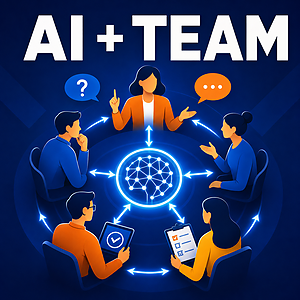
AI는 보고서를 작성하고 자료를 요약하는 개인 비서로 빠르게 자리 잡았다. 그러나 회의와 협업에 AI를 참여시키면 발언권과 토론 방식, 판단의 주도권까지 달라진다. 팀의 성과를 높이려면 AI 사용법을 익히는 데서 나아가 인간과 AI가 함께 일하는 규칙을 설계해야 한다.
[Key Message]
* 개인의 AI 활용 능력이 높아져도 팀의 의사결정이 저절로 좋아지는 것은 아니다. 팀 성과에는 업무 속도뿐 아니라 참여, 조율, 신뢰, 책임이 함께 작용한다.
* AI에 입력할 질문은 팀이 공동으로 설계해야 한다. 질문 작성 권한이 한 사람에게 집중되면 그 사람의 관점이 팀 전체의 문제 정의로 바뀔 수 있다.
* AI는 정답을 내리는 권위자가 아니라 비판자, 고객, 경쟁자, 미래 관찰자, 촉진자 등 다양한 역할을 맡아야 한다. 이러한 활용은 익숙한 가정을 흔들고 토론의 시야를 넓힌다.
* AI의 답변은 회의의 결론이 아니라 검증해야 할 사고 재료다. 사실과 추정, 가정과 의견을 구분하고 원자료, 전문가, 고객 및 현장의 정보를 통해 교차 검증해야 한다.
* 최종 판단과 책임은 끝까지 인간과 팀이 소유해야 한다. AI가 무엇을 제안했는지뿐 아니라 팀이 무엇을 선택했고 왜 그렇게 결정했는지를 명확히 기록해야 한다.
***
개인의 생산성이 팀의 성과를 보장하지 않는다
생성형 AI는 개인의 업무 방식을 빠르게 바꾸고 있다. 이메일 초안을 만들고, 긴 보고서에서 핵심을 추출하며, 아이디어를 정리하고, 복잡한 데이터를 이해하기 쉬운 문장으로 바꿔준다. 과거에는 몇 시간이 필요했던 작업을 몇 분 안에 처리할 수 있다는 경험이 확산되면서 AI는 어느새 특별한 혁신 기술이 아니라 일상적인 업무 도구가 됐다. 기업도 직원들에게 AI 계정을 제공하고 교육 프로그램을 운영하며 활용을 장려하고 있다.
그러나 개인이 AI를 잘 사용하는 것과 팀이 AI를 잘 사용하는 것은 전혀 다른 문제다. 개인 업무에서는 사용자와 AI 사이의 관계만 조정하면 된다. 원하는 결과가 나오지 않으면 질문을 수정하거나 다른 표현으로 다시 요청하면 된다. AI의 답변을 받아들일지 말지도 개인이 판단할 수 있다. 반면 팀 회의에는 서로 다른 직무와 전문성, 이해관계, 권한이 함께 들어온다. 한 사람에게 유용한 답변이 다른 사람에게는 중요한 조건을 빠뜨린 제안일 수 있고, 효율적인 정리가 누군가에게는 자신의 의견이 지워지는 경험이 될 수 있다.
개인 생산성은 기본적으로 작업 속도와 품질의 문제다. 팀 성과는 여기에 조정과 참여, 신뢰와 책임이라는 요소가 추가된다. 구성원 개개인이 AI를 활용해 더 많은 자료를 만들었다고 해서 팀이 더 나은 결정을 내리는 것은 아니다. 오히려 각자 다른 AI와 대화하고 서로 다른 전제에서 자료를 생산하면 정보의 양은 늘어나지만 공통의 이해는 약해질 수 있다. 회의에 제출되는 문서는 풍부해져도 어떤 자료를 믿어야 하는지, 서로 충돌하는 분석을 어떻게 조정할지 판단하는 데 더 많은 시간이 들기도 한다.
이러한 변화는 AI 활용의 중심이 개인에서 팀으로 이동할수록 중요해진다. 캐프제미니연구소가 전 세계 임원 500명을 대상으로 실시한 조사에서는 향후 3년 안에 팀 회의에서 AI를 적극적으로 활용하는 비율이 세 배 이상 증가할 것으로 전망됐다. 기업의 기대도 크다. AI가 회의 내용을 정리하고 정보를 즉시 제공하며 다양한 대안을 제시한다면 회의 시간을 줄이면서도 더 높은 수준의 결과에 도달할 수 있다는 판단이다.
문제는 AI를 회의에 추가한다고 해서 협업이 저절로 좋아지지는 않는다는 데 있다. 기존 회의가 소수의 발언에 좌우되고, 부서 간 정보가 충분히 공유되지 않으며, 결론을 내린 뒤에도 책임 소재가 불분명했다면 AI는 이러한 문제를 해결하기보다 더 빠르게 확대할 수 있다. 불완전한 협업 구조 위에 강력한 기술을 올리면 기존의 결함까지 강화되기 때문이다.
따라서 팀 단위 AI 도입에서 먼저 물어야 할 질문은 “어떤 AI를 사용할 것인가”가 아니다. “우리 팀은 어떤 방식으로 질문을 만들고, 누구의 관점을 반영하며, AI의 제안을 어떻게 검증하고, 최종 판단의 책임을 누가 질 것인가”를 물어야 한다. 기술을 선택하기 전에 협업의 원칙부터 세워야 하는 이유다.
AI가 들어온 회의에서 벌어지는 뜻밖의 문제
회의실에서 AI를 사용하는 가장 간단한 방법은 한 사람이 컴퓨터를 열고 팀을 대신해 질문을 입력하는 것이다. 겉으로는 효율적으로 보인다. 참석자들이 의견을 말하면 담당자가 프롬프트를 작성하고, AI가 몇 초 안에 답변을 내놓는다. 그러나 이 방식에는 눈에 잘 보이지 않는 권력의 이동이 일어난다. AI를 조작하는 사람이 질문의 표현과 범위, 포함할 조건과 제외할 조건을 선택하기 때문이다.
프롬프트는 단순한 명령문이 아니다. 무엇을 문제로 볼 것인지 결정하는 작은 의사결정 구조다. “신제품의 판매 전략을 제안해 달라”는 질문과 “기존 고객의 이탈을 줄이면서 신제품 매출을 높일 방법을 제안해 달라”는 질문은 서로 다른 답변을 만든다. 여기에 비용, 브랜드 가치, 현장 인력, 기술적 제약과 같은 조건을 포함하느냐에 따라서도 결과가 달라진다. 한 사람이 이 과정을 전담하면 그 사람의 관점이 자신도 모르는 사이 팀 전체의 질문으로 바뀔 수 있다.
다른 구성원들은 점차 관전자 모드로 밀려날 가능성이 있다. 화면에 AI의 답변이 빠르게 생성되면 사람들은 대화를 멈추고 결과를 읽기 시작한다. 이전에는 서로 질문하고 반박하며 생각을 발전시켰지만, 이제는 AI가 내놓은 문장을 평가하는 역할에 머물 수 있다. 회의가 인간과 인간의 대화에서 인간과 화면의 관계로 바뀌는 것이다. 특히 직급이 낮거나 발언 기회가 적은 구성원은 자신의 생각을 충분히 설명하기 전에 AI의 정리된 답변과 마주하게 된다.
논의가 분절되는 문제도 나타난다. 참석자들이 떠오르는 질문을 그때그때 AI에 입력하면 답변은 많아지지만 하나의 사고 흐름으로 연결되지 않을 수 있다. 시장 규모를 묻다가 경쟁사를 분석하고, 곧바로 홍보 문구를 만든 뒤 예상 위험을 질문하는 식이다. 각각의 답변은 그럴듯하지만 서로 다른 가정 위에 놓여 있을 가능성이 크다. 팀은 많은 정보를 확보했다고 느끼지만 정작 무엇을 결정해야 하는지는 더 불분명해진다.
AI가 제시한 첫 답변이 토론의 기준점이 되는 현상도 경계해야 한다. 사람은 처음 접한 숫자나 설명을 중심으로 이후 판단을 조정하는 경향이 있다. AI가 회의 초반에 특정 시장을 유망하다고 평가하면 이후 토론은 그 시장에 진출할지를 검토하기보다 어떻게 진출할지를 논의하는 방향으로 흐르기 쉽다. 아직 검증되지 않은 제안이 논의의 출발점을 넘어 사실상의 전제로 굳어지는 것이다.
문장이 유창하다는 점도 판단을 어렵게 한다. AI는 불확실한 내용도 논리적이고 자신감 있는 표현으로 제시할 수 있다. 자료의 근거가 약하거나 중요한 맥락이 빠져 있어도 형식이 완성돼 있으면 참석자들은 이를 높은 수준의 분석으로 받아들이기 쉽다. 시간에 쫓기는 회의에서는 출처와 조건을 하나씩 확인하기보다 “방향은 맞아 보인다”며 다음 단계로 넘어갈 가능성이 더욱 커진다.
가장 큰 문제는 판단의 소유권이 흐려지는 것이다. 팀이 AI의 제안을 선택했는데 결과가 좋지 않으면 누구의 판단이었는지 모호해진다. 질문을 입력한 사람, 답변에 동의한 참석자, 회의를 주재한 리더가 서로 책임을 미룰 수 있다. “AI가 그렇게 분석했다”는 말은 설명처럼 들리지만 실제로는 판단의 공백을 드러낸다. AI는 제안을 생성할 수 있을 뿐 그 제안을 채택한 결과에 책임질 수 없다.
AI가 회의의 질을 떨어뜨리는 원인은 기술 자체라기보다 준비되지 않은 사용 방식에 있다. 구성원이 어떤 역할을 맡고 AI가 어느 단계에 개입할지 정하지 않은 채 도구부터 실행하면, 참여는 줄어들고 논의는 조각나며 판단의 주도권은 팀 밖으로 이동할 수 있다. 회의 시간이 짧아지는 대신 숙고도 짧아질 수 있다는 뜻이다.
팀 전체가 함께 AI와 대화한다
AI를 팀 도구로 사용하기 위한 첫 번째 원칙은 AI와의 대화를 공동 작업으로 만드는 것이다. 누군가가 팀을 대신해 질문하고 답변을 전달하는 방식에서 벗어나, 질문을 만드는 과정 자체에 구성원들이 참여해야 한다. 좋은 프롬프트는 기술적으로 세련된 문장이 아니라 팀의 다양한 지식과 우려를 충실히 담은 질문이다.
회의를 시작할 때는 AI를 바로 실행하기보다 문제의 범위부터 합의하는 것이 좋다. 지금 해결해야 할 문제가 무엇인지, 어떤 결과가 필요한지, 고려해야 할 제약은 무엇인지, 아직 확인되지 않은 가정은 무엇인지 구성원들이 먼저 말해야 한다. 영업 담당자는 고객의 반응을, 재무 담당자는 비용과 수익성을, 기술 담당자는 구현 가능성을, 현장 담당자는 운영상의 위험을 제시할 수 있다. 이 관점들이 하나의 질문 안에 반영될 때 AI의 답변도 팀의 실제 상황에 가까워진다.
AI에 팀의 배경을 설명하는 과정도 필요하다. 구성원의 역할과 전문성, 프로젝트가 처한 환경, 이미 시도한 방법과 실패한 이유를 알려주면 일반적인 조언을 넘어 보다 구체적인 분석을 얻을 수 있다. 다만 이러한 정보에는 고객 정보나 영업비밀, 개인정보가 포함될 수 있으므로 기업의 보안 정책과 데이터 사용 기준을 따라야 한다. 더 많은 정보를 입력하는 것이 언제나 좋은 것은 아니다. 필요한 맥락은 제공하되 입력해서는 안 되는 정보의 경계를 분명히 해야 한다.
프롬프트는 한 사람이 완성한 뒤 보여주는 것이 아니라 화면에 공개한 상태에서 함께 수정할 수 있다. “고객 관점이 빠졌다”, “예산 조건을 넣어야 한다”, “이 표현은 이미 특정 결론을 전제한다”는 의견이 나올 수 있다. 이 과정은 다소 느려 보이지만 팀의 사고를 정렬하는 중요한 단계다. 구성원들은 질문을 함께 만드는 동안 서로가 무엇을 중요하게 생각하는지 이해하고, 문제에 대한 공통 언어를 형성한다.
AI가 답변을 내놓은 뒤에도 모든 구성원이 수정과 반박에 참여해야 한다. 누가 어떤 부분에 동의하는지, 무엇이 현실과 다른지, 어떤 정보가 누락됐는지 차례로 확인하는 방식이 효과적이다. AI의 답변을 회의의 결론으로 취급하지 않고 검토할 재료로 놓는 것이다. 이때 리더는 가장 먼저 자신의 평가를 밝히기보다 다른 구성원의 의견을 먼저 들을 필요가 있다. 리더가 AI의 답변에 긍정적인 반응을 보이면 반대 의견을 가진 구성원이 침묵할 수 있기 때문이다.
팀에는 AI와의 상호작용을 관리하는 역할도 필요하다. 다만 한 사람이 계속 프롬프트를 담당하면 다시 권한이 집중될 수 있으므로 회의마다 역할을 바꾸거나 단계별로 나누는 방법을 고려할 수 있다. 한 사람은 질문을 입력하고, 다른 사람은 답변의 근거를 확인하며, 또 다른 사람은 누락된 관점과 반론을 찾는 식이다. 역할이 분리되면 AI를 능숙하게 다루는 한 사람의 기술에 팀 전체가 의존하는 문제도 줄어든다.
발언의 균형을 확인하는 장치도 마련할 수 있다. AI를 사용하기 전 구성원들이 각자 독립적으로 의견을 적거나, 답변을 확인한 뒤 모든 참석자가 한 번씩 우려 사항을 말하도록 하는 방식이다. 독립적인 생각을 먼저 확보하면 AI의 첫 답변에 지나치게 영향을 받는 현상을 줄일 수 있다. 목소리가 큰 사람뿐 아니라 현장을 잘 아는 사람, 고객과 가까운 사람, 다른 경험을 가진 사람의 관점도 질문에 포함될 가능성이 높아진다.
여기서 중요한 것은 모두가 같은 AI 화면을 본다는 사실이 아니다. 팀원들이 질문의 형성과 답변의 해석에 함께 참여하고 있다는 감각이다. AI가 공동 자원으로 인식될 때 구성원은 기술의 결과를 수동적으로 소비하지 않고 적극적으로 개입한다. 팀용 AI의 핵심은 하나의 계정을 공유하는 데 있지 않다. 질문과 검증, 해석과 판단의 권한을 공유하는 데 있다.
AI에게 하나가 아닌 여러 역할을 맡긴다
회의에서 AI가 맡는 역할은 대개 기록과 요약에서 시작한다. 회의 내용을 정리하고 할 일을 추출하며 결정 사항을 문서화하는 기능은 유용하다. 그러나 AI를 기록자로만 사용하면 협업을 개선할 수 있는 더 큰 가능성을 놓치게 된다. AI는 의견을 대신 결정하는 권위자가 아니라 팀의 사고 범위를 넓히는 여러 역할로 활용할 수 있다.
대표적인 역할은 비판자다. 팀이 특정 방안에 빠르게 합의했을 때 AI에 그 결정이 실패할 수 있는 이유를 찾아 달라고 요청할 수 있다. 가장 취약한 가정은 무엇인지, 반대 입장에서는 어떤 문제를 제기할지, 예상하지 못한 부작용은 무엇인지 질문하는 것이다. 내부적으로 동의가 강한 팀일수록 이러한 역할이 중요하다. 구성원이 직접 반론을 제기하면 관계의 부담을 느낄 수 있지만, AI를 통해 반대 논리를 먼저 제시하면 토론의 문을 비교적 편하게 열 수 있다.
고객의 역할을 맡길 수도 있다. 신제품이나 서비스를 검토할 때 기업 내부의 논리는 쉽게 공급자 관점에 머문다. AI에 가격에 민감한 고객, 디지털 환경에 익숙하지 않은 고객, 기존 제품에 만족한 고객, 불만을 경험한 고객의 입장에서 질문하도록 요청하면 팀이 미처 보지 못한 마찰 지점을 발견할 수 있다. 물론 AI가 실제 고객을 완벽하게 대변하지는 못한다. 고객 조사와 현장 인터뷰를 대체하기보다 어떤 질문을 추가로 확인해야 하는지 찾는 도구로 활용해야 한다.
경쟁자나 외부 이해관계자의 역할도 가능하다. 경쟁사가 우리의 전략에 어떻게 대응할지, 규제기관은 어떤 위험을 문제 삼을지, 협력업체에는 어떤 부담이 생길지 검토할 수 있다. 하나의 안건을 서로 다른 입장에서 반복해 보면 팀 내부의 이해관계만으로는 보이지 않았던 영향을 확인할 수 있다. 특히 전략적 의사결정은 조직 내부에서 합리적으로 보여도 시장 전체의 반응에 따라 결과가 달라지므로 외부 관점을 의도적으로 불러오는 과정이 필요하다.
미래 관찰자 역할도 의미가 있다. 현재의 결정을 1년 뒤 또는 3년 뒤에서 돌아보며 무엇을 후회할 가능성이 있는지, 지금은 작아 보이지만 시간이 지나며 커질 위험이 무엇인지 묻게 하는 것이다. 단기 성과에 집중된 회의에서는 장기적인 역량 손실이나 고객 신뢰, 조직문화의 변화가 간과되기 쉽다. AI를 통해 시간의 시점을 바꿔 보면 판단의 범위를 넓힐 수 있다.
회의가 정체됐을 때는 촉진자 역할을 맡길 수 있다. 지금까지 나온 의견의 공통점과 차이점을 정리하고, 아직 답하지 못한 질문을 제시하며, 논의를 진전시킬 선택지를 만들어 달라고 요청하는 것이다. 다만 AI가 토론을 지나치게 매끄럽게 정리하면 실제 갈등이 사라진 것처럼 보일 수 있다. 표현이 다를 뿐 근본적으로 충돌하는 이해관계가 있다면 이를 분명히 드러내야 한다. 좋은 정리는 갈등을 감추는 것이 아니라 무엇이 합의됐고 무엇이 남아 있는지 구별하는 작업이다.
AI에 여러 역할을 맡기는 목적은 더 많은 답변을 받는 것이 아니다. 하나의 문제를 여러 각도에서 바라보고 팀이 당연하게 여겼던 가정을 흔드는 데 있다. “최선의 전략을 알려 달라”는 질문보다 “이 전략이 실패하는 세 가지 경로를 제시하라”, “서로 다른 고객 유형은 무엇을 우려할까”, “우리와 반대되는 결론이 타당하려면 어떤 조건이 필요할까”와 같은 질문이 팀의 사고를 깊게 만든다.
정답을 요구하는 순간 AI는 권위자처럼 보이기 쉽다. 반대로 반론과 질문, 시나리오와 대안을 요구하면 AI는 사고를 돕는 협력자가 된다. 팀이 필요로 하는 것은 언제나 빠른 결론이 아니다. 때로는 성급한 합의를 늦추고 아직 검토하지 않은 가능성을 발견하는 일이 더 중요하다. AI의 진정한 가치는 답을 빨리 내놓는 능력보다 팀이 더 좋은 질문을 만들도록 자극하는 능력에서 드러난다.
판단과 책임은 끝까지 팀이 소유한다
AI를 팀 도구로 활용하는 마지막 원칙은 판단과 책임의 경계를 분명히 하는 것이다. AI는 자료를 분석하고 선택지를 생성하며 논리를 비교할 수 있지만 조직의 목표와 가치, 위험 감수 수준을 스스로 결정할 수 없다. 같은 정보를 놓고도 기업의 상황과 책임에 따라 다른 선택이 필요하다. 무엇을 우선할지 정하는 일은 여전히 사람과 조직의 몫이다.
이를 위해서는 AI의 제안과 팀의 결정을 회의 기록에서 구분해야 한다. 어떤 질문을 입력했고 AI가 무엇을 제안했는지, 팀이 그중 무엇을 받아들이거나 거부했는지, 그 이유는 무엇인지 남길 필요가 있다. 모든 대화를 방대하게 저장하라는 뜻은 아니다. 결정에 영향을 준 핵심 가정과 검증 결과, 최종 책임자를 추적할 수 있어야 한다는 의미다.
AI의 답변을 검토하는 기본 절차도 마련해야 한다. 사실과 수치의 출처가 확인됐는지, 최신 정보인지, 조직의 실제 조건과 맞는지, 빠진 이해관계자는 없는지, 특정 집단에 불리한 편향이 포함되지 않았는지 살펴야 한다. 중요한 의사결정일수록 원자료와 전문가 의견, 고객과 현장의 정보를 통해 교차 검증해야 한다. AI가 자신 있게 표현했다고 해서 검증 수준을 낮춰서는 안 된다.
불확실성을 표시하는 습관도 중요하다. 확인된 사실, 추정, 가정, 의견을 구분하면 AI의 답변을 과도하게 신뢰하는 위험을 줄일 수 있다. 예를 들어 시장 규모는 공식 통계로 확인할 수 있지만 경쟁사의 향후 대응은 추정에 가깝다. 고객 반응 역시 과거 데이터에서 일부 단서를 얻을 수 있을 뿐 실제 조사 없이 단정하기 어렵다. 이 차이를 명시하면 팀은 어떤 부분에 추가 검증이 필요한지 알 수 있다.
팀의 AI 활용 규칙은 업무의 위험 수준에 따라 달라져야 한다. 아이디어 발산이나 회의 제목 정리에는 비교적 간단한 검토로 충분할 수 있다. 반면 인사 결정, 투자, 법률, 안전, 의료, 개인정보와 관련된 문제에는 훨씬 엄격한 기준이 필요하다. 사용 가능한 데이터의 범위, 인간 전문가의 검토 여부, 승인 권한과 기록 보존 방식까지 구체적으로 정해야 한다.
좋았던 프롬프트와 실패 사례를 팀의 자산으로 축적하는 것도 필요하다. 어떤 질문이 유용한 답변을 만들었는지뿐 아니라 어떤 질문이 토론을 편향시키거나 중요한 조건을 빠뜨렸는지도 기록해야 한다. 회의가 끝난 뒤 짧게라도 AI가 참여를 넓혔는지, 논의를 분절시켰는지, 판단을 개선했는지 돌아보면 팀만의 사용 원칙이 발전한다. AI 활용 능력은 한 번의 교육으로 완성되는 기술이 아니라 반복적인 실험과 성찰을 통해 만들어지는 협업 역량이다.
리더의 역할도 달라진다. 리더는 팀에서 AI를 가장 능숙하게 사용하는 사람이 될 필요는 없다. 그보다 구성원들이 자유롭게 질문하고 반론을 제기할 수 있는 환경을 만들며, AI의 답변이 권위로 굳어지지 않도록 관리해야 한다. 기술에 익숙한 사람에게 발언권이 집중되지 않는지, 현장의 경험과 소수 의견이 입력 과정에서 빠지지 않는지, 최종 결정을 누가 책임지는지 확인하는 일이 중요하다.
팀 단위의 AI 활용은 회의를 자동화하는 프로젝트가 아니다. 협업의 구조를 다시 설계하는 일이다. 개인이 혼자 AI를 사용할 때는 속도가 가장 눈에 띄지만, 팀이 함께 사용할 때는 관계와 권한, 참여와 책임이 성과를 좌우한다. AI가 회의록을 완벽하게 정리해도 구성원이 논의에서 소외됐다면 좋은 협업이라고 보기 어렵다. 회의 시간이 줄었어도 잘못된 가정을 검토하지 못했다면 생산성이 향상됐다고 말하기 힘들다.
좋은 팀은 AI를 대신 생각해 주는 존재로 대하지 않는다. 구성원들이 자신의 생각을 더 정확하게 표현하고, 서로 다른 관점을 비교하며, 익숙한 판단을 의심하도록 돕는 장치로 사용한다. AI가 답을 제시하면 팀은 그 답의 근거를 묻고, 누락된 조건을 찾으며, 반대되는 가능성을 검토한다. 결정이 내려진 뒤에는 “AI가 선택했다”고 말하지 않고 팀이 어떤 이유로 선택했는지 설명할 수 있어야 한다.
AI를 개인 도구에서 팀 도구로 전환한다는 것은 여러 사람이 같은 기술을 사용하는 것보다 훨씬 큰 변화를 뜻한다. 질문을 공동으로 만들고, AI에 다양한 역할을 부여하며, 답변을 함께 검증하고, 판단의 책임을 끝까지 인간이 소유하는 새로운 협업 방식을 구축하는 일이다. 이러한 원칙이 자리 잡을 때 AI는 구성원의 목소리를 줄이는 기술이 아니라 더 많은 관점을 연결하는 기술이 될 수 있다. 팀의 생각을 대신하는 도구가 아니라 팀이 더 깊고 넓게 생각하도록 돕는 공동의 지적 자원이 되는 것이다.
Reference
Harvard Business Review, May 2026, Rosani, G., Farri, E., Trabucchi, D., and Buganza, T., It’s Hard to Use AI as a Team. These 3 Practices Can Help

How to Use AI as a Team Tool, Not Just a Personal Tool
AI has rapidly established itself as a personal assistant that writes reports and summarizes materials. However, when AI participates in meetings and collaboration, it changes who gets to speak, how discussions unfold, and who takes the lead in making judgments. To improve team performance, organizations must move beyond learning how to use AI and design rules for how humans and AI should work together.
[Key Message]
* Strong individual AI skills do not automatically lead to better team decisions. Team performance depends not only on speed, but also on participation, coordination, trust, and accountability.
* Prompts should be designed collectively by the team. If one person controls how questions are framed, that individual’s perspective may quietly become the team’s definition of the problem.
* AI should serve in multiple roles, such as critic, customer, competitor, future observer, and facilitator, rather than acting as an authority that provides the correct answer. These roles challenge familiar assumptions and broaden the scope of discussion.
* AI-generated responses should be treated as material for verification, not as meeting conclusions. Teams must distinguish facts from estimates, assumptions, and opinions, and cross-check important claims against original sources, experts, customers, and frontline information.
* Final judgment and accountability must remain with people and the team. Organizations should document not only what AI proposed, but also what the team selected, why it made that decision, and who is responsible for the outcome.
***
Individual Productivity Does Not Guarantee Team Performance
Generative AI is rapidly changing the way individuals work. It drafts emails, extracts key points from lengthy reports, organizes ideas, and turns complex data into easy-to-understand sentences. As more people experience tasks that once took hours being completed in minutes, AI has become an everyday workplace tool rather than an exceptional technological innovation. Companies are also providing employees with AI accounts, offering training programs, and encouraging its use.
However, using AI well as an individual and using AI well as a team are entirely different matters. In individual work, only the relationship between the user and AI needs to be managed. If the desired result does not appear, the user can revise the question or ask again using different wording. The individual can also decide whether to accept the AI’s response. A team meeting, however, brings together people with different roles, areas of expertise, interests, and levels of authority. A response that is useful to one person may be a proposal that overlooks important conditions for another. An efficient summary may feel to someone else as though their opinion has been erased.
Individual productivity is fundamentally a matter of work speed and quality. Team performance adds other elements, including coordination, participation, trust, and responsibility. Even if every team member uses AI to produce more material, it does not necessarily mean the team will make better decisions. If individuals converse with different AI systems and produce materials based on different assumptions, the amount of information may increase while shared understanding weakens. The documents submitted to meetings may become richer, but it may also take more time to determine which materials should be trusted and how conflicting analyses should be reconciled.
This shift becomes increasingly important as the focus of AI use moves from individuals to teams. A Capgemini Research Institute survey of 500 executives worldwide projected that the proportion of organizations actively using AI in team meetings would more than triple within the next three years. Corporate expectations are also high. Companies believe that if AI can summarize meetings, provide information immediately, and suggest a variety of alternatives, teams may be able to reduce meeting time while achieving better outcomes.
The problem is that adding AI to meetings does not automatically improve collaboration. If existing meetings are dominated by a small number of voices, information is not adequately shared across departments, and responsibility remains unclear even after decisions are made, AI may amplify these problems more quickly rather than solve them. When powerful technology is placed on top of an imperfect collaborative structure, it can reinforce the structure’s existing flaws.
Therefore, the first question to ask when introducing AI at the team level is not, “Which AI should we use?” Teams should instead ask, “How will we formulate questions, whose perspectives will we include, how will we verify AI’s suggestions, and who will be accountable for the final judgment?” This is why the principles of collaboration must be established before the technology is selected.
Unexpected Problems That Arise When AI Enters the Meeting Room
The simplest way to use AI in a meeting is for one person to open a computer and enter questions on behalf of the team. On the surface, this appears efficient. Participants express their opinions, the designated person writes the prompt, and AI produces a response within seconds. Yet this approach creates a subtle shift in power. The person operating the AI chooses the wording and scope of the question, as well as which conditions to include and which to exclude.
A prompt is not merely a command. It is a small decision-making structure that determines what will be treated as the problem. The question “Suggest a sales strategy for our new product” will produce a different response from “Suggest a way to increase sales of our new product while reducing the loss of existing customers.” The result also changes depending on whether conditions such as cost, brand value, field personnel, and technical constraints are included. If one person manages this entire process, that person’s perspective may unconsciously become the team’s collective question.
Other team members may gradually be pushed into spectator mode. When an AI-generated response begins appearing rapidly on the screen, people may stop talking and start reading the result. Previously, they developed ideas by questioning and challenging one another, but they may now be confined to evaluating sentences produced by AI. The meeting shifts from a conversation between people to a relationship between people and a screen. Team members with less seniority or fewer opportunities to speak may encounter a polished AI response before they have had enough time to explain their own ideas.
Discussions may also become fragmented. If participants enter whatever questions come to mind into AI as the meeting proceeds, the number of responses increases, but those responses may not connect into a coherent line of thought. The team may ask about market size, move on to competitor analysis, immediately generate promotional copy, and then ask about potential risks. Each response may sound plausible, but it may be based on a different set of assumptions. The team feels that it has gathered a great deal of information, yet what it actually needs to decide becomes even less clear.
Teams should also be wary of the first response generated by AI becoming the reference point for the entire discussion. People tend to adjust later judgments around the first number or explanation they encounter. If AI evaluates a particular market as promising early in a meeting, the subsequent discussion is likely to shift from whether the company should enter that market to how it should enter. A proposal that has not yet been verified can harden into a working assumption rather than simply serving as a starting point for discussion.
The fluency of AI-generated language makes judgment more difficult as well. AI can present uncertain information in logical and confident language. Even when the evidence is weak or important context is missing, participants may accept the output as high-quality analysis because it appears complete and polished. In time-pressured meetings, people are even more likely to say, “The general direction seems right,” and proceed to the next step instead of checking every source and condition.
The most serious problem is that ownership of the judgment becomes blurred. If a team selects an AI-generated proposal and the outcome is poor, it may be unclear whose judgment it was. The person who entered the question, the participants who agreed with the response, and the leader who chaired the meeting may all shift responsibility to one another. The statement “That is what the AI concluded” may sound like an explanation, but it actually reveals a gap in accountability. AI can generate a proposal, but it cannot take responsibility for the consequences of adopting that proposal.
When AI lowers the quality of a meeting, the cause lies less in the technology itself than in an unprepared method of using it. If a team activates the tool before deciding what roles members will play and at which stages AI should intervene, participation may decline, the discussion may fragment, and control over judgment may move outside the team. Meeting time may become shorter, but the time devoted to careful consideration may shrink as well.
The Entire Team Should Engage in the Conversation with AI
The first principle of using AI as a team tool is to make interaction with AI a collaborative activity. Teams must move away from a model in which one person asks questions on behalf of everyone and simply delivers the answers. Members should participate in the process of formulating the questions themselves. A good prompt is not a technically sophisticated sentence. It is a question that faithfully incorporates the team’s diverse knowledge and concerns.
At the beginning of a meeting, the team should agree on the scope of the problem before activating AI. Members should first discuss what problem must be solved, what outcome is needed, what constraints must be considered, and which assumptions have not yet been verified. Sales personnel may present customer reactions, finance personnel may address costs and profitability, technical personnel may discuss feasibility, and field personnel may identify operational risks. When these perspectives are reflected in a single question, the AI’s response becomes more relevant to the team’s actual circumstances.
The team also needs to explain its background to the AI. Providing information about members’ roles and expertise, the project environment, approaches already attempted, and reasons for previous failures can produce more specific analysis rather than generic advice. However, this information may include customer data, trade secrets, or personal information, so the company’s security policies and data-use standards must be followed. Entering more information is not always better. Teams should provide the necessary context while clearly defining which information must never be entered.
Instead of having one person complete the prompt and then show it to everyone, the prompt can be displayed on the screen and revised collaboratively. Team members may point out that the customer perspective is missing, that budget constraints should be included, or that a particular expression already assumes a certain conclusion. This process may appear somewhat slow, but it is an important stage in aligning the team’s thinking. As members formulate the question together, they understand what others consider important and develop a shared language for discussing the problem.
Even after AI produces a response, every member should participate in revising and challenging it. One effective method is to examine, in turn, which parts each person agrees with, which parts differ from reality, and what information has been omitted. The AI response should be treated as material to be reviewed, not as the conclusion of the meeting. At this point, the leader should hear other members’ opinions before offering an evaluation. If the leader reacts positively to the AI response first, members with opposing views may remain silent.
The team also needs roles for managing its interactions with AI. However, if one person remains responsible for prompting, authority may once again become concentrated. Teams can therefore rotate the role from meeting to meeting or divide it by stage. One person might enter the questions, another verify the evidence behind the responses, and another identify missing perspectives and counterarguments. Dividing these roles also reduces the risk that the whole team will become dependent on the skills of a single person who is proficient at using AI.
Mechanisms can also be introduced to maintain a balance of participation. Before using AI, team members might independently write down their opinions. After seeing the response, every participant might be required to voice one concern. Securing independent viewpoints first can reduce the tendency to be overly influenced by the AI’s initial response. It also makes it more likely that the question will include not only the views of the loudest people but also those of people who understand field operations, work closely with customers, or possess different experiences.
What matters here is not merely that everyone is looking at the same AI screen. It is the sense that team members are participating together in shaping the question and interpreting the response. When AI is regarded as a shared resource, members do not passively consume its output. They actively intervene in the process. The essence of team-based AI does not lie in sharing a single account. It lies in sharing authority over questioning, verification, interpretation, and judgment.
Give AI Multiple Roles Instead of Just One
AI’s role in meetings usually begins with recording and summarization. Its ability to organize meeting discussions, extract action items, and document decisions is useful. However, using AI only as a note-taker means missing its broader potential to improve collaboration. AI should not be treated as an authority that makes decisions on behalf of the team. It can instead take on multiple roles that expand the range of the team’s thinking.
One representative role is that of a critic. When the team quickly agrees on a particular course of action, it can ask AI to identify why the decision might fail. The team can ask which assumptions are most vulnerable, what objections might be raised from an opposing position, and what unexpected side effects could arise. This role is especially important in teams where internal agreement is strong. Members may feel a relational burden when raising objections directly, but presenting an opposing argument through AI can open the door to discussion more comfortably.
AI can also take on the role of a customer. When considering a new product or service, a company’s internal logic can easily remain confined to the supplier’s perspective. By asking AI to raise questions from the viewpoints of a price-sensitive customer, a customer unfamiliar with digital environments, a customer satisfied with an existing product, or a customer who has experienced dissatisfaction, the team may discover friction points it had overlooked. Of course, AI cannot perfectly represent actual customers. It should be used to identify questions that require further investigation rather than to replace customer research and field interviews.
AI can also assume the role of a competitor or external stakeholder. It can examine how competitors might respond to the company’s strategy, what risks regulators might identify, and what burdens the strategy could impose on business partners. Reviewing the same agenda repeatedly from different positions can reveal effects that were invisible when viewed only through the team’s internal interests. Strategic decisions that appear reasonable within the organization may produce different outcomes depending on the response of the wider market, so external perspectives need to be introduced deliberately.
The role of a future observer can also be meaningful. The team can ask AI to look back on today’s decision from one or three years in the future and consider what it might regret or which risks that seem small today might grow over time. Meetings focused on short-term results can easily overlook the long-term loss of capabilities, customer trust, or changes in organizational culture. Shifting the point in time through AI can broaden the range of judgment.
When a meeting becomes stagnant, AI can serve as a facilitator. It can be asked to summarize the similarities and differences among the opinions expressed, identify questions that remain unanswered, and suggest options for advancing the discussion. However, if AI organizes the debate too smoothly, it may appear as though genuine conflict has disappeared. If there are fundamentally conflicting interests hidden beneath different forms of expression, those conflicts must be made explicit. A good summary does not conceal disagreement. It distinguishes what has been agreed upon from what remains unresolved.
The purpose of assigning AI multiple roles is not to receive more answers. It is to examine a single problem from several angles and challenge assumptions that the team has taken for granted. Questions such as “Present three ways this strategy might fail,” “What concerns would different types of customers have?” and “What conditions would make the opposite conclusion valid?” deepen the team’s thinking more effectively than asking, “Tell us the best strategy.”
The moment a team asks AI for the correct answer, AI can easily appear to be an authority. By contrast, when the team requests counterarguments, questions, scenarios, and alternatives, AI becomes a collaborator that supports thought. Teams do not always need a rapid conclusion. Sometimes it is more important to delay premature agreement and discover possibilities that have not yet been examined. AI’s true value is revealed less in its ability to produce answers quickly than in its ability to encourage teams to formulate better questions.
Judgment and Responsibility Must Remain with the Team
The final principle of using AI as a team tool is to define clear boundaries around judgment and responsibility. AI can analyze materials, generate options, and compare arguments, but it cannot independently determine an organization’s goals, values, or tolerance for risk. Even when presented with the same information, different choices may be necessary depending on the company’s circumstances and responsibilities. Deciding what should be prioritized remains the responsibility of people and organizations.
For this reason, AI-generated suggestions and team decisions should be distinguished in meeting records. Teams need to document which questions were entered, what AI proposed, which parts the team accepted or rejected, and why. This does not mean that every conversation must be preserved in exhaustive detail. It means that the key assumptions, verification results, and final decision-maker that influenced the decision should be traceable.
Teams should also establish a standard procedure for reviewing AI-generated responses. They must determine whether the sources of facts and figures have been verified, whether the information is current, whether it matches the organization’s actual conditions, whether any stakeholders have been omitted, and whether the response contains biases that disadvantage particular groups. The more important the decision, the more thoroughly it should be cross-checked against original sources, expert opinions, and information from customers and frontline operations. The level of verification should never be reduced simply because AI expresses itself confidently.
It is also important to develop the habit of indicating uncertainty. Distinguishing confirmed facts from estimates, assumptions, and opinions reduces the risk of placing excessive trust in AI responses. Market size, for example, may be confirmed through official statistics, whereas a competitor’s future response is closer to an estimate. Customer reactions may also be partially inferred from historical data, but they cannot be determined with certainty without actual research. Clearly stating these distinctions allows teams to identify which areas require additional verification.
Rules for team AI use should vary according to the level of risk involved in the work. Relatively simple review may be sufficient for brainstorming ideas or organizing meeting titles. Far stricter standards are required for matters involving personnel decisions, investments, legal issues, safety, healthcare, or personal information. Organizations must specifically define the scope of data that may be used, whether human experts must review the output, who has approval authority, and how records will be retained.
Teams should also accumulate successful prompts and failed cases as shared assets. They need to record not only which questions produced useful answers, but also which questions biased the discussion or omitted important conditions. Even a brief post-meeting review of whether AI broadened participation, fragmented the discussion, or improved judgment can help a team develop its own principles of use. The ability to use AI is not a skill completed through a single training session. It is a collaborative capability developed through repeated experimentation and reflection.
The leader’s role also changes. A leader does not need to be the person who uses AI most skillfully on the team. More importantly, the leader must create an environment in which members can freely ask questions and raise objections, while preventing AI responses from becoming unquestioned authority. The leader should monitor whether speaking power is becoming concentrated among technologically proficient members, whether field experience and minority opinions are being excluded from the input process, and who is accountable for the final decision.
Using AI at the team level is not a project for automating meetings. It is an effort to redesign the structure of collaboration. When individuals use AI alone, speed is the most visible benefit. When teams use it together, relationships, authority, participation, and responsibility determine performance. Even if AI produces a perfect meeting summary, it cannot be considered good collaboration if team members were excluded from the discussion. Even if meeting time is reduced, it is difficult to claim that productivity has improved if the team failed to examine flawed assumptions.
Strong teams do not treat AI as an entity that thinks on their behalf. They use it as a mechanism that helps members articulate their ideas more precisely, compare different perspectives, and question familiar judgments. When AI presents an answer, the team asks about its evidence, identifies missing conditions, and examines opposing possibilities. Once a decision has been made, members should not say, “AI chose it.” They must be able to explain why the team made that choice.
Transforming AI from a personal tool into a team tool represents a much greater change than simply having multiple people use the same technology. It means building a new way of collaborating in which questions are formulated collectively, AI is assigned diverse roles, responses are verified together, and responsibility for judgment remains with humans until the very end. When these principles become established, AI can serve not as a technology that diminishes the voices of team members, but as one that connects a wider range of perspectives. It becomes not a tool that replaces the team’s thinking, but a shared intellectual resource that helps the team think more deeply and broadly.
Reference
Harvard Business Review, May 2026, Rosani, G., Farri, E., Trabucchi, D., and Buganza, T., It’s Hard to Use AI as a Team. These 3 Practices Can Help